Elementary School
GRADES 1-5: “I LOVE THE WORLD”
Where wonder meets purposeful learning
Elementary education in the Waldorf tradition builds upon the joyful, imaginative foundation of early childhood, guiding students into new academic skills while nurturing their curiosity, confidence, and love of learning. Lessons are designed to engage the head, heart, and hands, helping children form a meaningful connection to knowledge, their peers, and the world around them.
Learning Through Story + Experience
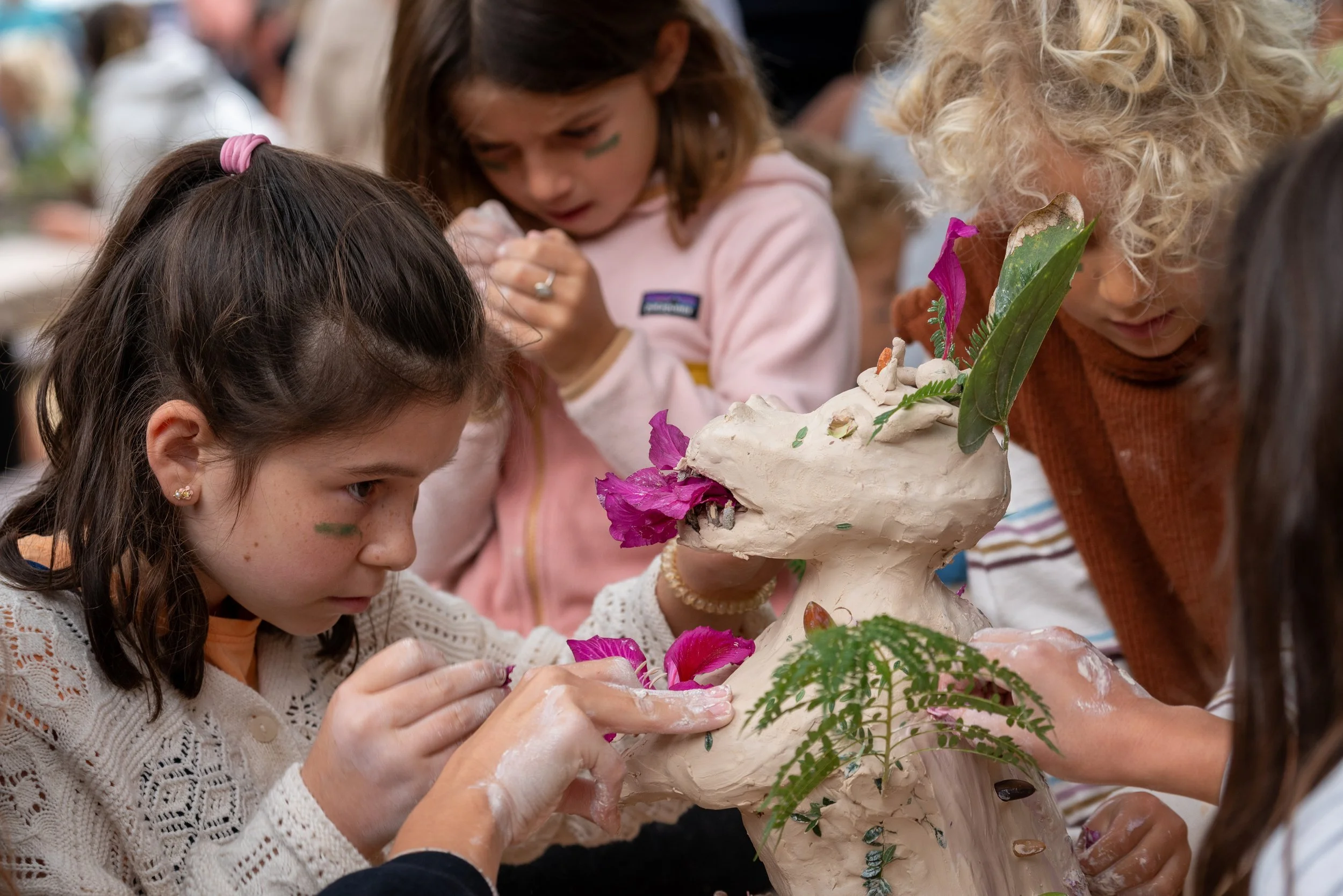
In the elementary years, teachers introduce academic subjects through rich stories, hands-on activities, and artistic practice. Whether students are exploring fractions through baking, learning history through myth and biography, or painting scenes from nature, learning is brought to life in a way that is memorable and deeply understood.
Every subject meets children at their developmental stage, fostering a sense of purpose, belonging, and joy.
Why Waldorf For The Elementary Years?
Waldorf Education Nurtures:
A lifelong love of learning
Curiosity + imagination
Strong academic skills
Confidence + independence
Creativity + resourcefulness
Healthy social relationships
By engaging the whole child—intellectually, emotionally, and practically—Waldorf schools help students grow into capable, compassionate young people ready for the challenges ahead.
Guiding Principles: A developmentally aligned curriculum
-
In Elementary education, students build strong skills in:
Language arts & literacy
Mathematics
History & cultural studies
Science & nature study
World languages
Subjects are taught in Main Lesson blocks, allowing deep, focused study over several weeks. Students create their own beautifully illustrated lesson books, building comprehension, creativity, and retention.
-
Art is woven into every subject—not as an extra, but as a pathway to deeper learning.
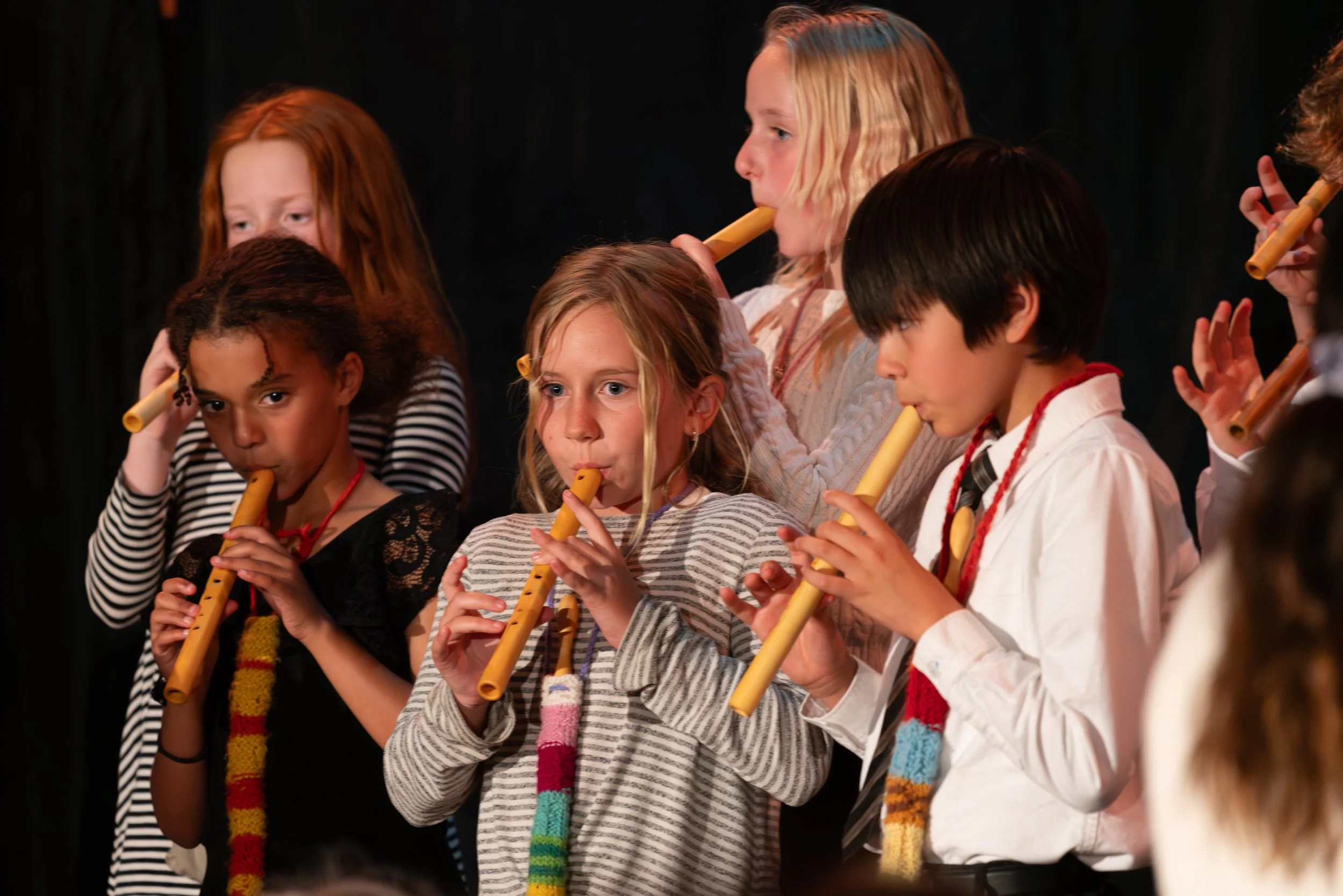
Students practice watercolor painting, form drawing, music, singing, and playing instruments, handwork (such as knitting and sewing), drama & storytelling. These experiences strengthen focus, motor skills, perseverance, and self-expression.
-
Daily movement supports healthy bodies and minds. Students engage in games & outdoor play, gardening & nature study, crafts, and practical work.
These activities help children develop coordination, resilience, and a felt sense of capability.
-
Elementary students typically work with the same class teacher for multiple years, forming a stable, nurturing relationship. This continuity allows teachers to understand each child deeply—academically, socially, and emotionally—and support their growth from a place of trust.
-
SOCIAL + EMOTIONAL LEARNING
The elementary years are a time of growing awareness of self and others. Through collaborative work, storytelling, class routines, festivals, and play, children learn cooperation, empathy, conflict resolution, respect for self and others.
The classroom community becomes a place where every child is seen, valued, and encouraged. -
Daily outdoor play and hands-on nature experiences help students feel grounded and connected to the environment. Seasonal rhythms, gardening, nature walks, and festival life foster care for the earth and a sense of belonging within the natural world.
-
Every morning begins with a two-hour Morning Lesson—a deep dive into a core academic subject tailored to the grade level. These subjects rotate in 3–4 week blocks and might include:
Ancient Egypt and the Nile
Zoology
Local History and Geography
Business Mathematics
Each Main Lesson opens with activities that help children fully arrive and engage in the school day, such as:
Rhythmic movement and counting
Group recitation
Singing and flute playing
Short math games or spelling challenges
Then, the central topic unfolds through rich storytelling, vivid historical and environmental depictions, and biographical sketches that spark imagination and empathy. Students then move into writing, discussion, and drawing to deepen understanding and bring the material into their thinking, feeling, and will.
-
Waldorf education emphasizes ‘technical prudence,’ which is a thoughtful, developmentally appropriate approach to technology that prioritizes human connection, hands-on experience, and imaginative engagement.
In 7th and 8th grades, the Cyber Civics curriculum teaches students to use technology responsibly. Just as traditional civics prepares young people to be good citizens in the real world, Cyber Civics teaches students how to navigate the internet and become “ethical, safe, and productive digital citizens.” This curriculum is activity-based, incorporating role-plays, projects, and case studies. -
Why Waldorf Education Doesn’t Use Traditional Textbooks:
In Waldorf schools, learning is meant to be alive, creative, and deeply personal—not just memorized facts from a printed page. Rather than relying on standard textbooks, students create their own Main Lesson Books: richly illustrated, hand-written records of what they’ve learned.
This approach supports the child’s development in several key ways:
Deeper Understanding Through Creation
By writing, drawing, and illustrating their own lesson books, students process information more actively and retain it more deeply. Learning becomes an artistic and intellectual experience, not passive absorption.
Bringing Subjects to Life
Rather than presenting dry facts, Waldorf teachers tell vivid stories, give lively demonstrations, and guide hands-on experiences. These are then expressed in each child’s own words and images—making learning feel meaningful and alive.
Integration of Art and Academics
Main Lesson Books weave together academic content with visual art, poetry, form drawing, and color. This strengthens both comprehension and creativity, engaging the whole brain and the whole child.
Pride and Ownership
Students take great pride in their books, which become treasured keepsakes for both families and students. They are not just learning tools—they're evidence of growth, individuality, and effort.
In short, Waldorf education avoids textbooks not out of rejection, but out of a deeper commitment: to teach in ways that are human-centered, developmentally appropriate, and emotionally resonant.
Each child creates their own Main Lesson Book—a personalized, beautifully illustrated record of their learning.
These books include:
Final-draft writing
Math or science process notes
Freehand illustrations
These treasured books are not just assessments—they become keepsakes, cherished by families for years.
-
After Main Lesson, a well-deserved snack, and recess, students return refreshed for subject classes:
First Grade has three subject lessons per day
Second through Eighth Grade have four subject lessons per day
Subjects range from music, movement, and handwork to foreign languages and science, all interwoven with the themes introduced in the Main Lesson. This integrated approach keeps students engaged and supports deeper, more joyful learning throughout the day.
Besides the prerequisite practice lessons in language arts and arithmetic, our Waldorf students have the pleasure of enjoying two lessons per week in the following subjects:
First, Second, and Third grades: Handwork (knitting, crochet), Flute, Spanish, Gardening, and Games (P.E.).
Fourth through Eighth grades: Spanish, Handwork - hand sewing (cross-stitch, embroidery, and other stitches), four needle knitting, and machine sewing, Woodwork (learning how to make useful and imaginative items through the proper use of hand and machine tools), Flute and Recorder, Strings Orchestra, Gardening, Games and Sports.
Elementary Grades Curriculum